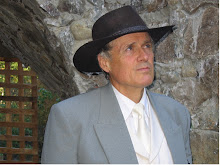

Christie, often called The Battling Barrister or
Counsel for the Damned, became notorious for his defence of some of the most
reviled hatemongers in the country. His clients included holocaust denier Ernst
Zundel, former Nazi guard Michael Seifert, fascist John Ross Taylor, and white
supremacist Paul Fromm. Christie studied law at the University of British
Columbia and rose to prominence in the mid-1980s defending James Keegstra, a
schoolteacher fined $5,000 for willfully promoting hatred against Jews by
teaching his students the Holocaust never happened and that a Jewish conspiracy
controlled world affairs.
Christie was strongly criticized by
anti-racists, had rocks thrown at him, and his office windows were smashed so
many times he had to board them up. Once, someone drove a truck through his
office. He was a polarizing figure, there’s no doubt. Christie, along with
Ottawa lawyer Richard Warman, were the subjects of Canadian Lawyer’s
March 2009 cover story “War of the Words,” which looked at the battle between
the free speech advocate and the push for laws outlawing hate. Warman would not
consent to have his photograph taken with Christie, going as far as insisting we
note in the article that the two men had been photographed
separately.
Many of his critics insisted Christie held the same repugnant
beliefs of those he defended in the courts but other than his desire to separate
the Western provinces from the rest of Canada, his personal beliefs were never
really out there on display. Until the end, Christie insisted he was defending
those who others wouldn’t. In one of the last interviews he gave before passing
away, he told Canadian Lawyer writer Jean Sorensen, “I take cases on
principal – I don’t care how long they take or if it costs me.”
He told
the National Post just before he died: “I don’t know anybody that’s
willing to take these on with the type of commitment I think is necessary,
because it certainly is a costly process, in time, in effort, and in
reputation,” comparing himself to Father Damien, a sainted 19th century Belgian
priest who cared for people with leprosy in Hawaii. “You become associated with
your clients and, as Father Damien found, eventually you become a leper.” And as
Conservative commentator Ezra Levant told our Legal Feeds blog: “For a
generation, Doug Christie was Canada’s leading free speech advocate. In fact, he
was often Canada’s only free speech advocate, which should be an embarrassment
to Canada’s legal establishment.”
Even the professional regulator saw
that Christie was willing to do what most other lawyers weren’t. When the B.C.
lawyer got into trouble with the Law Society of British Columbia over some
questionable subpoenas, his contribution to society was recognized. Christie was
found guilty of professional misconduct but in assessing costs, the hearing
panel tried to keep them as low as possible so it didn’t affect Christie’s
ability to practise. “The Panel recognizes the Respondent’s valuable
contribution to our free society and wants to enable him to continue with his
work, which he has often done pro bono or for greatly reduced
fees.”
Whether you agreed with Christie or not, he played a pivotal role
in the free speech debate in Canada. There have to be lawyers who are willing
and able to fight for those no one wants to fight for. It’s the essence of a
free and tolerant society. Who, now, will rise up to take his place and defend
those people, even if it means possibly being on the wrong end of a thrown rock?
Monday, June 10, 2013
One of Doug's Favorite Songs
Doug's singing voice was very much like Paul Robeson's deep bass that is evident in this song. "On My Journey, Mount Zion" is a song that Doug sang a lot, especially in the weeks just prior to his death.
Friday, May 24, 2013
The FreedomSite Blog: [VIDEO] Doug Christie Debates Human Rights Hack on...
The FreedomSite Blog: [VIDEO] Doug Christie Debates Human Rights Hack on...: The Doug Christie Video Archive In memory of Douglas Christie Doug Christie on the Cherington TV show June 1984 Douglas Chr...
Friday, May 3, 2013
Transcript of Doug on "As It Happens" February 26, 2013
As It Happens, February 26, 2013
Doug Christie made a career out of defending those that many would find indefensible: racists, Nazis, Holocaust deniers. For decades, Mr. Christie has been representing those accused of hate speech, people like Ernst Zundel and James Keegstra, on the grounds of freedom of expression, but he will not be able to do so for much longer. He has advanced liver cancer and doctors do not expect him to live long. He fears that no other lawyer will fill the void that he will leave behind. We reached Doug Christie in Victoria.
Q: Hi Mr. Christie, how are you feeling?
A: Well, not too well today.
Q: What are your doctors telling you?
A: I have about six months according to them, but it sometimes doesn’t feel it.
Q: What’s your gut telling you?
A: Well, it hasn’t spoken to me lately except to express extreme pain.
Q: I’m sorry to hear that.
A: Yes well, that’s the way it is.
Q: You’ve done a lot in a career but what you’re best known for I guess is defending the free speech rights of those on the extreme right. Jim Keegstra was one of your first high-profile clients, charged in ’84 and eventually convicted for teaching high school students the Holocaust was fraud and Jews were evil. Why did you want to defend him?
A: Well, because everyone should be entitled to express opinions. I suppose it wasn’t the appropriate forum in the sense I would expect the fact the government of any province can dictate what can be taught. I think that what you said was somewhat of an over-simplication of the situation, but accepting what you say for the moment for the sake of argument, I don’t care what a person’s opinion is, and I’ve said many times, free speech is the one thing you have to give to your worst enemy if you want to keep it for yourself.
Q: You’ve represented Holocaust deniers, anti-Semites, alleged leaders of the Ku Klux Klan, and white supremacists and I wonder why. What motivated you overall?
A: Well, because they’re the only people these days who are under attack for what they say. I don’t know, other than Little Sisters Bookstore, I don’t know too many people on the far left who’ve been hauled up before a Human Rights Commission or charged with promoting hatred. These people didn’t come to me or I would have represented them too.
Q: I wanted to ask you where you got that drive to take those kinds of cases, cases some lawyers would shy away from and you know, I half expect you to paraphrase that old story about the guy asked why he always robs banks who says “that’s where the money is.” Is that it if you want to take on freedom of speech cases, you have to take on the cases of the people testing it?
A: Well, that’s true, and their not usually people with money. They’re usually what I would call soft targets for the Crown, with the exception of the rather unwise decision of the Human Rights Commission to take on Maclean’s Magazine or Mark Steyn. They finally went one bridge too far on that. That’s when people began to question Section 13(1) in a serious way.
Q: What are the cases you’re most proud of?
A: Well, I think actually it would be the Finta case and maybe the Zundel case. The Finta case created a very important precedent that was contrary to Nuremburg law or the Nuremburg trials principles, which meant that obedience to superior orders is a defence if those orders are not manifestly unlawful.
Q: This was Imre Finta, the alleged war criminal.
A: Yes, the acquitted war criminal.
Q: And you refer to the Ernst Zundel case. What about that are you proudest of?
A: Well, it was basically a case where I would think he was about as unpopular as anybody in Toronto could be made to be, with the exception of the people who actually knew him. I think Madam Justice McLaughlin made a very courageous stand for free speech in that case and that’s where we finally won.
Q: There are those who believe you did the work because they sympathize with the politics of your clients. How often was that the case?
A: I don’t know if it’s ever been the case, really. I sympathize with every person who sincerely believes in an ideal, any ideal. And I don’t mean someone who puts it on for some sort of political game, and these people never did that by any means. So I sympathize with people who are persecuted, and I know of no people more persecuted than people in the position of James Keegstra or Malcolm Ross, or even Imre Finta or Ernst Zundel. They were the most vilified people I think ever to appear in the Canadian media.
Q: Was there a personal price you paid for taking on those kinds of cases, Mr. Christie? A stigma? Were you ever ostracized, harassed for it in any way?
A: Oh, my windows were broken, probably 15 times until I boarded them up. I’ve been spat at and hit, you know people have shouted at me on the street death threats. One time a guy was flying around my house and he said he was going to crash into my house, actually.
Q: Why do you think no one else is going to want to do the work that you’ve been doing? What do you feel will happen if no one picks it up.
A: Well, it isn’t something that anyone else was willing to do while I was alive, with the exception of Peter Lindsay, and I don’t know they’ll be a whole lot of people willing to do it after I’m dead, but you know, it’s essential in my opinion.
Q: You mentioned some of your clients. Do you have any regrets?
A: Only that I couldn’t carry on with other cases that are in the works now. I know the people that I’ve defended need help, and I feel that I’m going to be letting them down.
Q: Mr. Christie, thank you for speaking to us on As It Happens tonight.
A: It was a pleasure to speak to you.
Q: Bye-bye.
A: Bye-bye.
Doug Christie is a lawyer. We reached him in Victoria.
Doug Christie made a career out of defending those that many would find indefensible: racists, Nazis, Holocaust deniers. For decades, Mr. Christie has been representing those accused of hate speech, people like Ernst Zundel and James Keegstra, on the grounds of freedom of expression, but he will not be able to do so for much longer. He has advanced liver cancer and doctors do not expect him to live long. He fears that no other lawyer will fill the void that he will leave behind. We reached Doug Christie in Victoria.
Q: Hi Mr. Christie, how are you feeling?
A: Well, not too well today.
Q: What are your doctors telling you?
A: I have about six months according to them, but it sometimes doesn’t feel it.
Q: What’s your gut telling you?
A: Well, it hasn’t spoken to me lately except to express extreme pain.
Q: I’m sorry to hear that.
A: Yes well, that’s the way it is.
Q: You’ve done a lot in a career but what you’re best known for I guess is defending the free speech rights of those on the extreme right. Jim Keegstra was one of your first high-profile clients, charged in ’84 and eventually convicted for teaching high school students the Holocaust was fraud and Jews were evil. Why did you want to defend him?
A: Well, because everyone should be entitled to express opinions. I suppose it wasn’t the appropriate forum in the sense I would expect the fact the government of any province can dictate what can be taught. I think that what you said was somewhat of an over-simplication of the situation, but accepting what you say for the moment for the sake of argument, I don’t care what a person’s opinion is, and I’ve said many times, free speech is the one thing you have to give to your worst enemy if you want to keep it for yourself.
Q: You’ve represented Holocaust deniers, anti-Semites, alleged leaders of the Ku Klux Klan, and white supremacists and I wonder why. What motivated you overall?
A: Well, because they’re the only people these days who are under attack for what they say. I don’t know, other than Little Sisters Bookstore, I don’t know too many people on the far left who’ve been hauled up before a Human Rights Commission or charged with promoting hatred. These people didn’t come to me or I would have represented them too.
Q: I wanted to ask you where you got that drive to take those kinds of cases, cases some lawyers would shy away from and you know, I half expect you to paraphrase that old story about the guy asked why he always robs banks who says “that’s where the money is.” Is that it if you want to take on freedom of speech cases, you have to take on the cases of the people testing it?
A: Well, that’s true, and their not usually people with money. They’re usually what I would call soft targets for the Crown, with the exception of the rather unwise decision of the Human Rights Commission to take on Maclean’s Magazine or Mark Steyn. They finally went one bridge too far on that. That’s when people began to question Section 13(1) in a serious way.
Q: What are the cases you’re most proud of?
A: Well, I think actually it would be the Finta case and maybe the Zundel case. The Finta case created a very important precedent that was contrary to Nuremburg law or the Nuremburg trials principles, which meant that obedience to superior orders is a defence if those orders are not manifestly unlawful.
Q: This was Imre Finta, the alleged war criminal.
A: Yes, the acquitted war criminal.
Q: And you refer to the Ernst Zundel case. What about that are you proudest of?
A: Well, it was basically a case where I would think he was about as unpopular as anybody in Toronto could be made to be, with the exception of the people who actually knew him. I think Madam Justice McLaughlin made a very courageous stand for free speech in that case and that’s where we finally won.
Q: There are those who believe you did the work because they sympathize with the politics of your clients. How often was that the case?
A: I don’t know if it’s ever been the case, really. I sympathize with every person who sincerely believes in an ideal, any ideal. And I don’t mean someone who puts it on for some sort of political game, and these people never did that by any means. So I sympathize with people who are persecuted, and I know of no people more persecuted than people in the position of James Keegstra or Malcolm Ross, or even Imre Finta or Ernst Zundel. They were the most vilified people I think ever to appear in the Canadian media.
Q: Was there a personal price you paid for taking on those kinds of cases, Mr. Christie? A stigma? Were you ever ostracized, harassed for it in any way?
A: Oh, my windows were broken, probably 15 times until I boarded them up. I’ve been spat at and hit, you know people have shouted at me on the street death threats. One time a guy was flying around my house and he said he was going to crash into my house, actually.
Q: Why do you think no one else is going to want to do the work that you’ve been doing? What do you feel will happen if no one picks it up.
A: Well, it isn’t something that anyone else was willing to do while I was alive, with the exception of Peter Lindsay, and I don’t know they’ll be a whole lot of people willing to do it after I’m dead, but you know, it’s essential in my opinion.
Q: You mentioned some of your clients. Do you have any regrets?
A: Only that I couldn’t carry on with other cases that are in the works now. I know the people that I’ve defended need help, and I feel that I’m going to be letting them down.
Q: Mr. Christie, thank you for speaking to us on As It Happens tonight.
A: It was a pleasure to speak to you.
Q: Bye-bye.
A: Bye-bye.
Doug Christie is a lawyer. We reached him in Victoria.
Wednesday, May 1, 2013
Doug Christie in 1985 on "Crossfire"
After the first Zundel "False News" trial in 1985, Doug Christie appeared on the show "Crossfire" and was aggressively questioned by Ian Mulgrew of the Globe & Mail, law professor Kathleen Mahoney, and George Oak of the Edmonton Journal.
He responds to them in true Doug Christie fashion.
Doug then was defense counsel in the first Keegstra "hate speech" trial, which went to the Supreme Court twice, and a second Zundel trial (1988) that went all the way to the Supreme Court of Canada, resulting in the law being declared unconstitutional.
Sunday, April 14, 2013
A View of Free Speech in 1997
Doug Christie wrote the following foreward in 1997 to the second edition of his booklet Free Speech Is the Issue! which reproduced his arguments before the Supreme Court of Canada in the Keegstra case:
It is now 1997, December, about eight years after my speech in the Keegstra case to the Supreme Court of Canada. I said on page 8 of this booklet:
"It will legitimize many other laws. ... I do not need to worry about that, but it is an improper attempt to legitimaze these laws." There I was attempting to describe the unanimity with which the Attorneys-General of the various provinces all agreed in arguing for the "hate" laws.
It is now clear after the passage of the last eight years that the people really don't care. The laws have become more severe. The prosecutions of innocent people have become more numerous.
Malcolm Ross has been fired from his job for merely expressing his own religious views off the job, by a one-man human rights tribunal appointed by the New Brunswick government. Paul Fromm has been fired for speaking at a free speech conference in Vancouver and at a funeral memorial in Urbana, Illinois, both on his own time.
The future seems very unstable and unclear.
The future for freedom of speech is more restricted as the Liberty Net case in Ottawa was lost before the Supreme Court. The internet case of Ernst Zundel is before a Canadian Human Rights tribunal. Both the latter two cases involve the action of Canadians in other countries, like the United State, where Ernst Zundel's website is located and where the Liberty Net's phone message was transferred.
Doug Collins' case has gone before the one person B.C. Human Rights Tribunal consisting of Nitya Iyer (a lawyer for the Yukon Status of Women in a previous case) and, after $203,000 in legal fees, he was found not guilty but the B.C. Human Rights law (section 7.1) which allows a tribunal to control publications in newspapers, still stands.
[In 1999, Doug Collins was found guilty of a discriminatory practice under the same law for four columns, including the one originally found not to offend. He was fined $2,000. Mr. Collins is now seeking judicial review of the constitutionality of this law.]
The chill remains. The power of the state grows.
The individual diminishes and most people in Canada have given up on freedom as long as it doesn't affect them.
The bites out of the freedom apple have taken even the core.
This time is a dark hour for freedom.
We have allowed ourselves to be imprisoned and robbed of our freedom by a government which is run by questionable men.
For my part, I believe that we must remain calm, rational and tolerant. We must write rational and persuasive letters to newspapers. We must give money, time, energy and prayers to those who are threatened and persecuted for their beliefs. The people need to be awakened and reformed into articulate speakers for freedom.
Of course, the Supreme Court of Canada had rejected the arguments you are about to read. They rejected them four to three. The majority even said that truth is not a defence worth recognizing, if hatred is promoted. The same three who sided with me in the first appeal sided against me in the second when Mr. Keegstra was convicted a second time.
The cases since have been even worse for free speech.
The future of those who stand on these issues can improve only if people read or are better informed, active and more articulate. We must circulate this booklet and make people aware of what is really happening.
The suppression of thought, belief and opinion which is so ominous in our time can only be reversed by self-sacrificing efforts of each of us to restore our freedoms by peaceful means. We must do this because where freedom is lost irrevocably, it cannot be recovered by peaceful means.
The governments of most provinces, the federal government, the various pressure groups all agree. They want more power to suppress speech they don't like.
They push and push and push, until freedom is squeezed into a tiny place where it is surrounded and hemmed in, where people can only talk to each other in a whisper and even then, they suspect their neighbours might turn on them and destroy them by informing.
They will be pushed until they are afraid to talk in their sleep or until they push back. Then and only then will freedom return as only then will it have many worthy champions. Dear reader, the challenge is yours.
Douglas H. Christie
Victoria, B.C.
December 30, 1997
It is now 1997, December, about eight years after my speech in the Keegstra case to the Supreme Court of Canada. I said on page 8 of this booklet:
"It will legitimize many other laws. ... I do not need to worry about that, but it is an improper attempt to legitimaze these laws." There I was attempting to describe the unanimity with which the Attorneys-General of the various provinces all agreed in arguing for the "hate" laws.
It is now clear after the passage of the last eight years that the people really don't care. The laws have become more severe. The prosecutions of innocent people have become more numerous.
Malcolm Ross has been fired from his job for merely expressing his own religious views off the job, by a one-man human rights tribunal appointed by the New Brunswick government. Paul Fromm has been fired for speaking at a free speech conference in Vancouver and at a funeral memorial in Urbana, Illinois, both on his own time.
The future seems very unstable and unclear.
The future for freedom of speech is more restricted as the Liberty Net case in Ottawa was lost before the Supreme Court. The internet case of Ernst Zundel is before a Canadian Human Rights tribunal. Both the latter two cases involve the action of Canadians in other countries, like the United State, where Ernst Zundel's website is located and where the Liberty Net's phone message was transferred.
Doug Collins' case has gone before the one person B.C. Human Rights Tribunal consisting of Nitya Iyer (a lawyer for the Yukon Status of Women in a previous case) and, after $203,000 in legal fees, he was found not guilty but the B.C. Human Rights law (section 7.1) which allows a tribunal to control publications in newspapers, still stands.
[In 1999, Doug Collins was found guilty of a discriminatory practice under the same law for four columns, including the one originally found not to offend. He was fined $2,000. Mr. Collins is now seeking judicial review of the constitutionality of this law.]
The chill remains. The power of the state grows.
The individual diminishes and most people in Canada have given up on freedom as long as it doesn't affect them.
The bites out of the freedom apple have taken even the core.
This time is a dark hour for freedom.
We have allowed ourselves to be imprisoned and robbed of our freedom by a government which is run by questionable men.
For my part, I believe that we must remain calm, rational and tolerant. We must write rational and persuasive letters to newspapers. We must give money, time, energy and prayers to those who are threatened and persecuted for their beliefs. The people need to be awakened and reformed into articulate speakers for freedom.
Of course, the Supreme Court of Canada had rejected the arguments you are about to read. They rejected them four to three. The majority even said that truth is not a defence worth recognizing, if hatred is promoted. The same three who sided with me in the first appeal sided against me in the second when Mr. Keegstra was convicted a second time.
The cases since have been even worse for free speech.
The future of those who stand on these issues can improve only if people read or are better informed, active and more articulate. We must circulate this booklet and make people aware of what is really happening.
The suppression of thought, belief and opinion which is so ominous in our time can only be reversed by self-sacrificing efforts of each of us to restore our freedoms by peaceful means. We must do this because where freedom is lost irrevocably, it cannot be recovered by peaceful means.
The governments of most provinces, the federal government, the various pressure groups all agree. They want more power to suppress speech they don't like.
They push and push and push, until freedom is squeezed into a tiny place where it is surrounded and hemmed in, where people can only talk to each other in a whisper and even then, they suspect their neighbours might turn on them and destroy them by informing.
They will be pushed until they are afraid to talk in their sleep or until they push back. Then and only then will freedom return as only then will it have many worthy champions. Dear reader, the challenge is yours.
Douglas H. Christie
Victoria, B.C.
December 30, 1997
Tuesday, April 9, 2013
Words to Remember
In a letter that Doug wrote to T.A. Klingel on March 28, 1986 he said:
"No space or time divides those who love the truth."
Now that Doug has passed from this life, that is something we are trying to remember.
"No space or time divides those who love the truth."
Now that Doug has passed from this life, that is something we are trying to remember.
Sunday, April 7, 2013
Doug's Speech at University of Ottawa, April 8, 2010
Notes for Doug’s Speech
University of Ottawa
April 8, 2010
I’m here to talk about free speech. I’m not here to practice it.
Unlike Ann Coulter, I don’t need a warning from the provost. I am a Canadian, trained by law in the way of silence, sullen silence, and code language. I have been trained by the Supreme Court not to engage in hate speech, even though no one can define it in advance, so I can avoid it.
There are general taboo topics which I must avoid or tread lightly around, like race, religion, ethnic origin, sex, sexual orientation, mental or physical disability or mental status. Then there are peripheral taboo topics like multiculturalism, immigration, affirmative action programs and a host of other ill-defined topics.
I have been trained to remain very sensitive to the broad political implications of these topics lest I face a very expensive lesson in the Human Rights Tribunal.
What the Supreme Court taught me when I appeared in Taylor and Zundel and Keegstra was that free speech has its limits in “hate” which means “extreme dislike.” So presumably I must like all races, religions, ethnic origins, etc. equally or at least dislike them only moderately. Or at least pretend to, which is more Canadian. I cannot denounce any one as evil.
The Law Society, through its decision of Harvey Strosberg taught me that if I speak in public, “law students” may tape some but not all of my words, and the Chairman of the Discipline Committee can issue a statement to the media condemning me as “identifying with a lunatic fringe,” even in the very act where he decides not to give me the benefit of a hearing where I could answer the allegation with evidence where both sides could be heard.
I learned in McAleer and Malcolm Ross, both of which went to the Supreme Court of Canada, that expressing your religious beliefs on your own time, is no defence and placing the messages in the United States where it is legal, is no defence if you mention where you can get the message to someone in Canada.
I learned that our parliamentarians of all parties love free speech so much that they banned someone from the precincts of Parliament who wanted to rent the parliamentary press gallery, a place anyone can rent for a press conference.
What was the press conference about? That the Human Rights Tribunal had ruled in Zundel’s case that “Truth was no defence,” and the truth of the statement could not be proven by any evidence. I know because that someone was me, the only lawyer in Canadian history to be banned by all party agreement from the precincts of parliament. Because in Canada truth is no defence. Orwell was right about double speak. Randy White a so-called Reform MP said he did not want me in his work place. Orwell was right about a lot of things.
I have learned and been carefully taught to avoid the taboo topics, to measure every word lest a tape recorder in the audience be taken to the Human Rights Commission, the police, the Law Society, or someone who likes to complain to the Human Rights Commission.
I have learned to talk about free speech but never practice it. Never say anything like Ann Coulter would say, coming from a free society. And being in a university setting is all the more reason to be very careful about how you chose your words. The left-wing political giants who run most universities are able to let loose the mob with a wink and the students know their success with many professors depends on how successfully they can entrap a political foe.
Universities are the most dangerous place to practice free speech. Even topics like abortion which you would not normally [expect to] involve a taboo topic can quickly be spun into forbidden territory and sexism can result in expulsion or criminal charges. The civility of universities is accorded to those who can mobilize the largest screaming mob. No one listens.
I have to even be careful how I speak about Freedom of Speech.
So let me just speak about freedom of speech... I do not want to be cynical or bitter. But since 1984 when I took up the cause of freedom, I have become aware of the price to be paid for this precious legacy of freedom.
My office has been vandalized, repeatedly; my name has been defamed in the press; I have been the target of spurious complaints to law societies, I haven been banned from the precincts of parliament. The very press who today became the target of complaints themselves because they post on the internet, who have come late to the battle, because of their money and power, are turning the tide. They were not long ago in the forefront of the mob, vilifying my clients and myself, since it was not their ox that was gored. Irony, thy name is Canada.
1984, the year Orwell entitled his most famous work was actually the year I got involved in the defence of James Keegstra. From that moment on, the lawyer who had defended successfully all manner of criminal cases from drugs to rape to murder and with no ill effects to his reputation other than professional jealousy became in the eyes of many, through the window of the media, a hated nazi-lawyer. This title, I have worn to this day, at first reluctantly and gradually resigned myself to it, knowing as “Human Rights” law tells us, “Truth is no defence.” Promoting hatred of an individual is no offence.
I would never be elected anywhere to anything. Any party would expel me, the right or left for fear of the media. I was warned this would happen. “Better alone than in the company of hypocrites,” I reasoned.
There is one hope and that is that truth cannot be buried forever, and people will tell it, come what may, even about race, religion, or ethnicity. There are some truths to be told on that score. They are the building blocks of culture and even the government of Quebec is recognizing this, even though they wrap it in convoluted language. Oops! I almost practiced free speech!
The best indication of what is the true value of free speech is provided by what happens when it is taken away. The thinking people become “bush league.” The first reaction to a controversial idea is not to hear the person about whom you heard, but to adopt the mob-mind view.
Left-wing, multicultural, tolerant, good. Right wing, xenophobic, intolerant, bad. A few code words and the mob takes the argument to the streets. The psychological guillotine cuts off debate and civility like the real guillotine cut off heads in Paris in the revolution till there were no heads to cut off. Everybody was at the same low level of passive, intellectual obedience to the omnipotent state. Then a forceful tyrant like Napoleon can impose his will with very little difficulty. Do we really have to go through these cycles of oppression, revolution, depression? Have we no intellect to listen for ourselves, evaluate for ourselves, accept or reject an idea with a civil attitude of tolerance? Do we need to have a hysterical violent reaction to every idea of a different perspective?
The Roman maxim: “Audi Alteram Partem” was over the door of the law library at McGill University where I once spoke. I entered through that doorway to face a hostile screaming mob, much like Ann Coulter faced. They had never met me. They could never hear me. Why did they reject me before hearing me? Why not hear both sides? Sometimes all sides need to be heard. Until they are, how can you really form an intelligent and informed opinion?
I believe the truth is that the idea of tolerance has been used as an Orwellian doublespeak smoke screen for intolerance and is really about narrowing the scope of debate before the debate begins. This is consistent with Marxism, but it is not consistent with liberalism or of constitutional principles of free speech. Certain topics cannot be discussed.
We don’t absolutely make it illegal to talk about certain subjects, we just make it so dangerous, with so many obscure and complex rules that no one dares to go there. Somewhat like gun laws. We don’t overtly ban all fire arms. No, we would find too much resistance and rational criticism. The hypocritical Canadian way is simply to regulate them out of existence, gradually, just like controversial speech. Hate laws mean whatever we say they mean. We will only tell you after you say something if you have offended. This is the process of gradual Marxism. The state gradually disarms the citizen of their weapons and their free speech by slow degrees so that absolute control both physical and mental will be with the state.
The other side of this equation is the enforcers, state agents, professional complainers, the enablers of state power. These are the people who go from politicians to judge or from politician to president of a University. They create a network of willing and compliant officials who can be counted on to cleverly manipulate and manage the progress from freedom, which they call “anarchy,” to the tyranny they call a “benevolent oligarchy.”
Thus they acquire through a system of servants and paid enforcers, through Human Rights Commissions and police forces where they are the only persons authorized by law to break into your house, seize your computer, examine your files, your books, your speeches, your appearances and even your surreptitiously recorded comments as in the case of David Ahenakew.
They can ruin you. They can prosecute you. They can and will vilify you in the press. As was done to David Ahenakew and then even if you win, you still lose. You go through court for four years of stress and when you are finally acquitted, no one says “sorry” or pays your costs. On the contrary, they repeat in the media around the world the words of the judge condemning you in the very act of acquitting you.
And the state has all the guns, police, sheriffs, jails, probation officers, all paid by the state which you support with your taxes. If you want to be a paid bully, there’s a job for you. If you want to shoot people, just don’t say so, join the RCMP. You can taser people like Dziekanski. If you want to shoot teenagers like Ian Bush, or misfits like Jeff Hughes, and never be charged, join the RCMP.
Just be sure you don’t admit what you did and the establishment will protect you. You are after all, protecting them. We are paying for our own enslavement. Only a few really know where we are going. The rest are following along for the ride, and the free lunch.
(Oops! Too much free speech!)
So if you want to carry on down the road to tyranny, just shout me down. If you want to go quietly into the night of tyranny, just ignore what I have said. Put it out of your mind and never think of it again. But if you want to move forward to a better world keep this in mind. The legitimate function of the state is to preserve and maximize the freedom of the conscience, belief and opinion of the individual. It is not to create a social model of artificial cultural stew, enforced by law. We have inherent rights to survive as a free people only to the extent we articulate, manifest with rigorous debate, and listen to, all opinion with an enlightened and critical mind. Let us not presume we are possessed of all knowledge before the discussion starts, and set a limited agenda for social and acceptable speech.
Where once sex was a taboo topic, it has now become an obsession. Speech about race, if suppressed becomes an obsession and if further suppressed, leads to violence. Let’s get debate out of the closet on all matters. Let’s use it, or we’ll lose it.
I have not said anything. More than anything, I have been allowed to speak here without interruption on the belief I would be ineffectual and secondly I would make the administration look better than the last speaker who was cancelled. I realized this at the beginning, but it is an opportunity to make the point that the redemption of an individual like me, or a society like your university, or of a country like Canada, is only possible if we listen to each other and talk openly about all of our serious and sensitive issues. Unless this really happens, Canada isn’t worth saving and neither is this university.
I will leave here knowing more than anyone in this room about the battles for free speech that have gone on in this country in the last thirty years. I see only minor changes occurring. This is your chance to ask what you need to know to make a difference. Questions?
University of Ottawa
April 8, 2010
I’m here to talk about free speech. I’m not here to practice it.
Unlike Ann Coulter, I don’t need a warning from the provost. I am a Canadian, trained by law in the way of silence, sullen silence, and code language. I have been trained by the Supreme Court not to engage in hate speech, even though no one can define it in advance, so I can avoid it.
There are general taboo topics which I must avoid or tread lightly around, like race, religion, ethnic origin, sex, sexual orientation, mental or physical disability or mental status. Then there are peripheral taboo topics like multiculturalism, immigration, affirmative action programs and a host of other ill-defined topics.
I have been trained to remain very sensitive to the broad political implications of these topics lest I face a very expensive lesson in the Human Rights Tribunal.
What the Supreme Court taught me when I appeared in Taylor and Zundel and Keegstra was that free speech has its limits in “hate” which means “extreme dislike.” So presumably I must like all races, religions, ethnic origins, etc. equally or at least dislike them only moderately. Or at least pretend to, which is more Canadian. I cannot denounce any one as evil.
The Law Society, through its decision of Harvey Strosberg taught me that if I speak in public, “law students” may tape some but not all of my words, and the Chairman of the Discipline Committee can issue a statement to the media condemning me as “identifying with a lunatic fringe,” even in the very act where he decides not to give me the benefit of a hearing where I could answer the allegation with evidence where both sides could be heard.
I learned in McAleer and Malcolm Ross, both of which went to the Supreme Court of Canada, that expressing your religious beliefs on your own time, is no defence and placing the messages in the United States where it is legal, is no defence if you mention where you can get the message to someone in Canada.
I learned that our parliamentarians of all parties love free speech so much that they banned someone from the precincts of Parliament who wanted to rent the parliamentary press gallery, a place anyone can rent for a press conference.
What was the press conference about? That the Human Rights Tribunal had ruled in Zundel’s case that “Truth was no defence,” and the truth of the statement could not be proven by any evidence. I know because that someone was me, the only lawyer in Canadian history to be banned by all party agreement from the precincts of parliament. Because in Canada truth is no defence. Orwell was right about double speak. Randy White a so-called Reform MP said he did not want me in his work place. Orwell was right about a lot of things.
I have learned and been carefully taught to avoid the taboo topics, to measure every word lest a tape recorder in the audience be taken to the Human Rights Commission, the police, the Law Society, or someone who likes to complain to the Human Rights Commission.
I have learned to talk about free speech but never practice it. Never say anything like Ann Coulter would say, coming from a free society. And being in a university setting is all the more reason to be very careful about how you chose your words. The left-wing political giants who run most universities are able to let loose the mob with a wink and the students know their success with many professors depends on how successfully they can entrap a political foe.
Universities are the most dangerous place to practice free speech. Even topics like abortion which you would not normally [expect to] involve a taboo topic can quickly be spun into forbidden territory and sexism can result in expulsion or criminal charges. The civility of universities is accorded to those who can mobilize the largest screaming mob. No one listens.
I have to even be careful how I speak about Freedom of Speech.
So let me just speak about freedom of speech... I do not want to be cynical or bitter. But since 1984 when I took up the cause of freedom, I have become aware of the price to be paid for this precious legacy of freedom.
My office has been vandalized, repeatedly; my name has been defamed in the press; I have been the target of spurious complaints to law societies, I haven been banned from the precincts of parliament. The very press who today became the target of complaints themselves because they post on the internet, who have come late to the battle, because of their money and power, are turning the tide. They were not long ago in the forefront of the mob, vilifying my clients and myself, since it was not their ox that was gored. Irony, thy name is Canada.
1984, the year Orwell entitled his most famous work was actually the year I got involved in the defence of James Keegstra. From that moment on, the lawyer who had defended successfully all manner of criminal cases from drugs to rape to murder and with no ill effects to his reputation other than professional jealousy became in the eyes of many, through the window of the media, a hated nazi-lawyer. This title, I have worn to this day, at first reluctantly and gradually resigned myself to it, knowing as “Human Rights” law tells us, “Truth is no defence.” Promoting hatred of an individual is no offence.
I would never be elected anywhere to anything. Any party would expel me, the right or left for fear of the media. I was warned this would happen. “Better alone than in the company of hypocrites,” I reasoned.
There is one hope and that is that truth cannot be buried forever, and people will tell it, come what may, even about race, religion, or ethnicity. There are some truths to be told on that score. They are the building blocks of culture and even the government of Quebec is recognizing this, even though they wrap it in convoluted language. Oops! I almost practiced free speech!
The best indication of what is the true value of free speech is provided by what happens when it is taken away. The thinking people become “bush league.” The first reaction to a controversial idea is not to hear the person about whom you heard, but to adopt the mob-mind view.
Left-wing, multicultural, tolerant, good. Right wing, xenophobic, intolerant, bad. A few code words and the mob takes the argument to the streets. The psychological guillotine cuts off debate and civility like the real guillotine cut off heads in Paris in the revolution till there were no heads to cut off. Everybody was at the same low level of passive, intellectual obedience to the omnipotent state. Then a forceful tyrant like Napoleon can impose his will with very little difficulty. Do we really have to go through these cycles of oppression, revolution, depression? Have we no intellect to listen for ourselves, evaluate for ourselves, accept or reject an idea with a civil attitude of tolerance? Do we need to have a hysterical violent reaction to every idea of a different perspective?
The Roman maxim: “Audi Alteram Partem” was over the door of the law library at McGill University where I once spoke. I entered through that doorway to face a hostile screaming mob, much like Ann Coulter faced. They had never met me. They could never hear me. Why did they reject me before hearing me? Why not hear both sides? Sometimes all sides need to be heard. Until they are, how can you really form an intelligent and informed opinion?
I believe the truth is that the idea of tolerance has been used as an Orwellian doublespeak smoke screen for intolerance and is really about narrowing the scope of debate before the debate begins. This is consistent with Marxism, but it is not consistent with liberalism or of constitutional principles of free speech. Certain topics cannot be discussed.
We don’t absolutely make it illegal to talk about certain subjects, we just make it so dangerous, with so many obscure and complex rules that no one dares to go there. Somewhat like gun laws. We don’t overtly ban all fire arms. No, we would find too much resistance and rational criticism. The hypocritical Canadian way is simply to regulate them out of existence, gradually, just like controversial speech. Hate laws mean whatever we say they mean. We will only tell you after you say something if you have offended. This is the process of gradual Marxism. The state gradually disarms the citizen of their weapons and their free speech by slow degrees so that absolute control both physical and mental will be with the state.
The other side of this equation is the enforcers, state agents, professional complainers, the enablers of state power. These are the people who go from politicians to judge or from politician to president of a University. They create a network of willing and compliant officials who can be counted on to cleverly manipulate and manage the progress from freedom, which they call “anarchy,” to the tyranny they call a “benevolent oligarchy.”
Thus they acquire through a system of servants and paid enforcers, through Human Rights Commissions and police forces where they are the only persons authorized by law to break into your house, seize your computer, examine your files, your books, your speeches, your appearances and even your surreptitiously recorded comments as in the case of David Ahenakew.
They can ruin you. They can prosecute you. They can and will vilify you in the press. As was done to David Ahenakew and then even if you win, you still lose. You go through court for four years of stress and when you are finally acquitted, no one says “sorry” or pays your costs. On the contrary, they repeat in the media around the world the words of the judge condemning you in the very act of acquitting you.
And the state has all the guns, police, sheriffs, jails, probation officers, all paid by the state which you support with your taxes. If you want to be a paid bully, there’s a job for you. If you want to shoot people, just don’t say so, join the RCMP. You can taser people like Dziekanski. If you want to shoot teenagers like Ian Bush, or misfits like Jeff Hughes, and never be charged, join the RCMP.
Just be sure you don’t admit what you did and the establishment will protect you. You are after all, protecting them. We are paying for our own enslavement. Only a few really know where we are going. The rest are following along for the ride, and the free lunch.
(Oops! Too much free speech!)
So if you want to carry on down the road to tyranny, just shout me down. If you want to go quietly into the night of tyranny, just ignore what I have said. Put it out of your mind and never think of it again. But if you want to move forward to a better world keep this in mind. The legitimate function of the state is to preserve and maximize the freedom of the conscience, belief and opinion of the individual. It is not to create a social model of artificial cultural stew, enforced by law. We have inherent rights to survive as a free people only to the extent we articulate, manifest with rigorous debate, and listen to, all opinion with an enlightened and critical mind. Let us not presume we are possessed of all knowledge before the discussion starts, and set a limited agenda for social and acceptable speech.
Where once sex was a taboo topic, it has now become an obsession. Speech about race, if suppressed becomes an obsession and if further suppressed, leads to violence. Let’s get debate out of the closet on all matters. Let’s use it, or we’ll lose it.
I have not said anything. More than anything, I have been allowed to speak here without interruption on the belief I would be ineffectual and secondly I would make the administration look better than the last speaker who was cancelled. I realized this at the beginning, but it is an opportunity to make the point that the redemption of an individual like me, or a society like your university, or of a country like Canada, is only possible if we listen to each other and talk openly about all of our serious and sensitive issues. Unless this really happens, Canada isn’t worth saving and neither is this university.
I will leave here knowing more than anyone in this room about the battles for free speech that have gone on in this country in the last thirty years. I see only minor changes occurring. This is your chance to ask what you need to know to make a difference. Questions?
Saturday, April 6, 2013
Free Speech Hero Passes On: Doug Christie remembered in The Barnes Review
Free Speech Hero Passes On: Doug Christie » The Barnes Review
Note: The video clip at the end is not actually Doug's last interview, but a YouTube video he recorded on his channel some time ago. The last interview was in reality an appearance on John Gormley's radio show in Saskatchewan (February 27) which is apparently no longer available, and the second-last interview was on CBC's As It Happens (February 26).
Note: The video clip at the end is not actually Doug's last interview, but a YouTube video he recorded on his channel some time ago. The last interview was in reality an appearance on John Gormley's radio show in Saskatchewan (February 27) which is apparently no longer available, and the second-last interview was on CBC's As It Happens (February 26).
Wednesday, April 3, 2013
Farewell to Douglas Christie
Emotional Farewell for
Free Speech Warrior Douglas Christie in Toronto
[continue reading The FreedomSite Blog]
Monday, April 1, 2013
Who, indeed?
Canadian Lawyer magazine's Gail Cohen, asks the question that we've heard many of Doug's peers asking since his death on March 11th of this year:
Who, now, will defend the indefensible? | Canadian Lawyer Magazine
Who, now, will defend the indefensible? | Canadian Lawyer Magazine
“I do not agree with what you have to say, but I’ll
defend to the death your right to say it.”
The above quote is often attributed to French philosopher Voltaire, but it is most likely a paraphrase by another writer of something Voltaire may have said. Nonetheless, it should be the heart of the matter where defenders of free speech are concerned. And last month, Canada lost one of its most controversial defenders of free speech when British Columbia lawyer Doug Christie died of cancer.
[end of article]The above quote is often attributed to French philosopher Voltaire, but it is most likely a paraphrase by another writer of something Voltaire may have said. Nonetheless, it should be the heart of the matter where defenders of free speech are concerned. And last month, Canada lost one of its most controversial defenders of free speech when British Columbia lawyer Doug Christie died of cancer.
Wednesday, March 20, 2013
The Funeral of Douglas H. Christie
The FreedomSite Blog: The Funeral of Douglas H. Christie - Canada's grea...: In Loving Memory of Douglas Hewson Christie April 24, 1946 to March 11, 2013 The Funeral Mass for Can...
The FreedomSite Blog: Tributes to Doug Christie
The FreedomSite Blog: Barbara Kulaszka, Ezra Levant, Paul Fromm and othe...: Thoughts and Tributes on the passing of Douglas Christie One of Canada’s Greatest Freedom Fighters “I think m...
A very moving tribute to Doug Christie and freedom...
The FreedomSite Blog: A very moving tribute to Doug Christie and freedom...: The Lesson of Doug Christie – A Tribute to One Man and his Commitment to Freedom of Speech March 17, 2013 http:...
The FreedomSite Blog: Douglas Christie obituary
The FreedomSite Blog: Douglas Christie obituary: Douglas Hewson Christie Born, Winnipeg, April 24, 1946, died of metastatic liver cancer, Victoria, March 11, 2013. ...
Tuesday, September 25, 2012
Artificial Nations
Recently, in the National Post, Lawrence Solomon wrote a very interesting article in which he criticized the two alternatives of withdrawing from any involvement in the Middle East and simply rewarding our friends and punishing our enemies as he put it. His third alternative was apparently to assist in the creation of smaller, ethnically homogenous states as I understand it. But a sentence leaped off the page that resonated in my mind as a much broader perception of the hundred year period from 1850 to 1950.
He said “the Western world has got to take responsibility for the artificial nations it has created.” He was speaking, of course, of the renunciation of colonialism that created such nations as Syria, Lebanon, Iraq, Palestine, and Libya. In each of these entities, he correctly identified that diverse and obviously hostile ethnic groups were confined within the same borders, and ultimately caused a form of radicalization and detachment from tradition and stability, which today is manifest in a strident anti-Americanism. He could equally have said that the creations of Czechoslovakia, Yugoslavia, and the division and transfer of Prussia to Poland and to Russia, likewise created ethnic tensions which have never really been resolved.
It occurred to me that these perceptions cover a period of time from approximately 1850 to 1950, during which period the European powers abandoned the entities which they had amalgamated and administered as colonies. From a Western Canadian perspective, this particularly applied to the creation of Canada. It was, after all, the amalgamation of vast, diverse areas with conflicting interests, ideologies, languages, and cultures into one country which has emerged as a multicultural polyglot. Today, it reflects the modern version of United Nations chaos. It has, in fact, no identity, no culture, no common language, no flag that reflects any value whatsoever, but compromise, compromise, compromise.
As long as these entities, created artificially and completely without reference to ethnic identity, tradition, language, or culture, are involved in a period of relative prosperity, conflict does not appear to occur, but the Middle East is a perfect example of what in the long run will happen to every multicultural nation.
Canada is, today, an institution created by 19th Century thinking, by a group of colonial officials in London who wished to divest themselves of a vast, administrative nightmare, where for over 4000 miles of territory, they lacked sufficient resources to either police, control, or alternatively benefit. They made the practical decision of delegating all their authority to something “Canadian.” There never was, in actual fact, an entity known as Canada. In the same sense that today’s Syria is made up of conflicting groups, Alawites, Kurds, Sunni, and Shi’ite Muslim interests, there is an overwhelming tendency to impose authority by force, currently demonstrated by Hafez Assad, and in Libya for the same reason previously imposed by the Gadhafi family.
The West, in hope of its stability, had subsidized, supported, and in fact funded dictators like Saddam Hussein, Hafez Assad, and Gadhafi, all of whom they could deal with, much as they did with Egypt’s president, Mubarak, by giving them money. That whole system is coming unravelled today and the biggest area of stability appears to be the absolutely monarchy of Saudi Arabia and the rather polyglot nation of India. Pakistan, it appears, is lapsing into a form of narco-political anarchy.
All of these concerns demonstrate the fragility and lack of stable traditional harmony which a nation deserves and which a nation can achieve.
Mr. Solomon pointed out the success of the South Sudan separation from the north of Sudan. The latter is stridently Muslim and extremely hostile to the West and South Sudan is a proud ally of the West.
In the same way, Canada could be divided into the regions of Ontario, Quebec, and the Maritimes, being three separate entities, the four western provinces being one country with a common language and a common interest in resource production. Only over time could a common culture emerge, by a closer identification with the essential interests of the people living in the region. Canada today is a unique bastion of stability in a world of economic, debt-ridden chaos. Ireland, Europe, the United States, all former areas of wealth and prosperity, are sinking into debt depravity. Canada, on the other hand, supporting its economy essentially by the export of Western Canadian resources, is relatively stable with the continuing ignorance of Western Canadians that the wealth of Canada is being borne on their backs with the taxation they provide being used to subsidize such wasteful enterprise as the perpetual education at minimal cost of Quebec university students.
Gradually, Western Canadians are waking up, and much as the South Sudanese became much better off when they were free and independent, Western Canadians will soon learn the same salutary lesson. The essential ingredients of Western Separatism therefore are as follows:
1.) A realization of the colonial arrangement that created Canada.
2.) A realization of the costs of Confederation to Western Canada.
3.) The political will to do what is legally possible, ratified by the Clarity Act, and upheld by the Supreme Court of Canada, which is conduct a referendum for independence in each province of Western Canada, and amalgamate a nation from the provinces so choosing, with a regionally-elected Senate, a common language, common economic policy, smaller government, and constitutional rights of referendum, initiative, and recall.
The foregoing formula will rectify the irresponsible transfer of authority to the government of Canada of 1867, which once done was never possible to correct, change, or rectify, because of the fact its constitution became and was at that time, un-amendable and impossibly complicated.
Our job in the Western Block is to create a new wave of understanding, and a hope for the future by the recognition of the hundred years of irresponsibility that produced chaos around the world from 1850 to 1950, and from India to the Middle East to Canada, set up countries that had no right or benefit to their existence.
He said “the Western world has got to take responsibility for the artificial nations it has created.” He was speaking, of course, of the renunciation of colonialism that created such nations as Syria, Lebanon, Iraq, Palestine, and Libya. In each of these entities, he correctly identified that diverse and obviously hostile ethnic groups were confined within the same borders, and ultimately caused a form of radicalization and detachment from tradition and stability, which today is manifest in a strident anti-Americanism. He could equally have said that the creations of Czechoslovakia, Yugoslavia, and the division and transfer of Prussia to Poland and to Russia, likewise created ethnic tensions which have never really been resolved.
It occurred to me that these perceptions cover a period of time from approximately 1850 to 1950, during which period the European powers abandoned the entities which they had amalgamated and administered as colonies. From a Western Canadian perspective, this particularly applied to the creation of Canada. It was, after all, the amalgamation of vast, diverse areas with conflicting interests, ideologies, languages, and cultures into one country which has emerged as a multicultural polyglot. Today, it reflects the modern version of United Nations chaos. It has, in fact, no identity, no culture, no common language, no flag that reflects any value whatsoever, but compromise, compromise, compromise.
As long as these entities, created artificially and completely without reference to ethnic identity, tradition, language, or culture, are involved in a period of relative prosperity, conflict does not appear to occur, but the Middle East is a perfect example of what in the long run will happen to every multicultural nation.
Canada is, today, an institution created by 19th Century thinking, by a group of colonial officials in London who wished to divest themselves of a vast, administrative nightmare, where for over 4000 miles of territory, they lacked sufficient resources to either police, control, or alternatively benefit. They made the practical decision of delegating all their authority to something “Canadian.” There never was, in actual fact, an entity known as Canada. In the same sense that today’s Syria is made up of conflicting groups, Alawites, Kurds, Sunni, and Shi’ite Muslim interests, there is an overwhelming tendency to impose authority by force, currently demonstrated by Hafez Assad, and in Libya for the same reason previously imposed by the Gadhafi family.
The West, in hope of its stability, had subsidized, supported, and in fact funded dictators like Saddam Hussein, Hafez Assad, and Gadhafi, all of whom they could deal with, much as they did with Egypt’s president, Mubarak, by giving them money. That whole system is coming unravelled today and the biggest area of stability appears to be the absolutely monarchy of Saudi Arabia and the rather polyglot nation of India. Pakistan, it appears, is lapsing into a form of narco-political anarchy.
All of these concerns demonstrate the fragility and lack of stable traditional harmony which a nation deserves and which a nation can achieve.
Mr. Solomon pointed out the success of the South Sudan separation from the north of Sudan. The latter is stridently Muslim and extremely hostile to the West and South Sudan is a proud ally of the West.
In the same way, Canada could be divided into the regions of Ontario, Quebec, and the Maritimes, being three separate entities, the four western provinces being one country with a common language and a common interest in resource production. Only over time could a common culture emerge, by a closer identification with the essential interests of the people living in the region. Canada today is a unique bastion of stability in a world of economic, debt-ridden chaos. Ireland, Europe, the United States, all former areas of wealth and prosperity, are sinking into debt depravity. Canada, on the other hand, supporting its economy essentially by the export of Western Canadian resources, is relatively stable with the continuing ignorance of Western Canadians that the wealth of Canada is being borne on their backs with the taxation they provide being used to subsidize such wasteful enterprise as the perpetual education at minimal cost of Quebec university students.
Gradually, Western Canadians are waking up, and much as the South Sudanese became much better off when they were free and independent, Western Canadians will soon learn the same salutary lesson. The essential ingredients of Western Separatism therefore are as follows:
1.) A realization of the colonial arrangement that created Canada.
2.) A realization of the costs of Confederation to Western Canada.
3.) The political will to do what is legally possible, ratified by the Clarity Act, and upheld by the Supreme Court of Canada, which is conduct a referendum for independence in each province of Western Canada, and amalgamate a nation from the provinces so choosing, with a regionally-elected Senate, a common language, common economic policy, smaller government, and constitutional rights of referendum, initiative, and recall.
The foregoing formula will rectify the irresponsible transfer of authority to the government of Canada of 1867, which once done was never possible to correct, change, or rectify, because of the fact its constitution became and was at that time, un-amendable and impossibly complicated.
Our job in the Western Block is to create a new wave of understanding, and a hope for the future by the recognition of the hundred years of irresponsibility that produced chaos around the world from 1850 to 1950, and from India to the Middle East to Canada, set up countries that had no right or benefit to their existence.
Monday, September 17, 2012
The Coming Police State
Recently, while watching an American television program called “Law & Order,” I heard a statement presented as an introduction to the program which truly shocked: “The criminal justice system has two parts, the police who apprehend criminals and the prosecutors who present evidence of their crimes in court.” To a vast audience of the young, naïve, and perhaps unsophisticated, this is all there is. I thought this might be just an American view, but then I began to think of my experience.
I thought of W. T.’s case, where the police seized my client’s sailboat which was his only home, $47,000 in cash which he held in trust from investors in his boat during repairs, and then they took his car. He was left with a bicycle and a hotel bill. His crime? He has never been convicted of any drug crime since 1994, when he was fined $400 for cultivating marijuana. He is not charged with any crime now, nor are any criminal charges pending against him. No need of proof, no need of evidence of crime, just seizure by Canada Border Agency and Civil Forfeiture. Why bother with courts? Just take what you want if you carry a gun.
I thought of Bruce Montague, a former gunsmith who because he objects to the gun registry, refuses to obtain licenses or registration of his vast gun collection. He securely hides them in a secret sealed room so even the police can’t find them. After a trial in which the myriad of complex gun laws are presented to a confused jury by a self-assured prosecutor, they convict him of unsafe storage, improper storage, and unlawful possession, and in 120 counts damn him for keeping his own property, safely. Unsatisfied with that, the government wants forfeiture of all the guns, ammunition, and other items seized. The court partly agrees. The province wants civil forfeiture of his log house, which he and his family built with their own hands from scratch. In that action, they have no right to remain silent, no right to a jury, no right to the presumption of innocence, and no right to proof beyond a reasonable doubt. The state needs only prove a balance of probabilities.
There are many more examples I could give, but I shall stop with these two examples. The first statement at the beginning of “Law & Order” reveals the premise of all the rest. There is no person ever wrongly accused, no need of a defence counsel, no need of an impartial judge, no need of a trial really. Just take the money, property, savings, and home of the alleged criminal. Crime pays – the State. Thus, a police state arrives with no dictatorial revolution. Why is this? There are three main reasons…
1. Firstly, the average Canadian wants to be nice and sees police as nice, so to be accepted as Canadian, they help police. This is supposed to be the way to prove patriotism in the minds of many. Police are well paid, respected, privileged, and trusted to carry guns, so they must be right. This is an impression based on prestige and the desire to be acceptable.
2. Secondly, the average Canadian can see what has happened to those who stand up to authority, to either question or reject (or as authorities would say “to defy”) authority. They can see what happens to those on the disapproval side of authority and they are very afraid it might happen to them. This is a very powerful impression based on fear, subtle unstated but effective fear.
3. Thirdly, there is a strong sense of conformity in society and an inherent belief in all groups that their leadership must be nice and benevolent. This permeates society because to believe otherwise creates discomfort, alienation, and among moral beings (to which category most ordinary people belong) a strong obligation to do something about it. Much easier to just believe in the system and if some G8 protester gets locked up without trial or charge, he or she must have done something wrong. This group delusion is based on the herd instinct, conformity, laziness, and comfort in the status quo. Put another way, change is uncomfortable and inertia prevents it.
What is the Remedy?
The police state is really the last phase of a decadent culture, in denial of its founding premises. It really appeals to all the worst features of an entrenched elite, to which everybody struggles to conform and to belong. This is precisely where Canada is now. The elite owns and controls the media, and elects the politicians, who appoint the judges, who impose the desires of the State with absolute unquestioning obedience. Canada has left power in the hands of a Central Canadian Mafia since 1867 and left the West and the Maritimes as useless appendages, of no consequence unless the opinions of the Ontario and Quebec mafia appear to disagree. In that case, the election is actually decided with votes from Western Canada.
So to restore true democracy, a Triple-E Senate, referendum, initiative, and recall, to re-establish a vision of liberty throughout our land, we must free the West. Change in Canada in a positive sense is impossible. Those who wanted a Triple-E Senate discovered this when they attempted to amend the constitution and ran head first into the wall of opposition in Ontario and Upper Canada. Improvement in a positive sense in Western Canada is inevitable and desirable. What can we in the West have? The essential alternative between a growing, intrusive, burdensome police state, ramming their way into our lives, or Independence and a whole new way of self-government where our voices really count. The bitterness of many at the growing police state requires a return to a peaceful referendum to avoid violence. Violence of any individual merely legitimizes much more effective violence by the state against the individual. Thus, we see our final goal of Independence as the only way for positive, constructive change and to sideline forever all talk of violence. Ordinary people need to join and support our movement for positive change.
I thought of W. T.’s case, where the police seized my client’s sailboat which was his only home, $47,000 in cash which he held in trust from investors in his boat during repairs, and then they took his car. He was left with a bicycle and a hotel bill. His crime? He has never been convicted of any drug crime since 1994, when he was fined $400 for cultivating marijuana. He is not charged with any crime now, nor are any criminal charges pending against him. No need of proof, no need of evidence of crime, just seizure by Canada Border Agency and Civil Forfeiture. Why bother with courts? Just take what you want if you carry a gun.
I thought of Bruce Montague, a former gunsmith who because he objects to the gun registry, refuses to obtain licenses or registration of his vast gun collection. He securely hides them in a secret sealed room so even the police can’t find them. After a trial in which the myriad of complex gun laws are presented to a confused jury by a self-assured prosecutor, they convict him of unsafe storage, improper storage, and unlawful possession, and in 120 counts damn him for keeping his own property, safely. Unsatisfied with that, the government wants forfeiture of all the guns, ammunition, and other items seized. The court partly agrees. The province wants civil forfeiture of his log house, which he and his family built with their own hands from scratch. In that action, they have no right to remain silent, no right to a jury, no right to the presumption of innocence, and no right to proof beyond a reasonable doubt. The state needs only prove a balance of probabilities.
There are many more examples I could give, but I shall stop with these two examples. The first statement at the beginning of “Law & Order” reveals the premise of all the rest. There is no person ever wrongly accused, no need of a defence counsel, no need of an impartial judge, no need of a trial really. Just take the money, property, savings, and home of the alleged criminal. Crime pays – the State. Thus, a police state arrives with no dictatorial revolution. Why is this? There are three main reasons…
1. Firstly, the average Canadian wants to be nice and sees police as nice, so to be accepted as Canadian, they help police. This is supposed to be the way to prove patriotism in the minds of many. Police are well paid, respected, privileged, and trusted to carry guns, so they must be right. This is an impression based on prestige and the desire to be acceptable.
2. Secondly, the average Canadian can see what has happened to those who stand up to authority, to either question or reject (or as authorities would say “to defy”) authority. They can see what happens to those on the disapproval side of authority and they are very afraid it might happen to them. This is a very powerful impression based on fear, subtle unstated but effective fear.
3. Thirdly, there is a strong sense of conformity in society and an inherent belief in all groups that their leadership must be nice and benevolent. This permeates society because to believe otherwise creates discomfort, alienation, and among moral beings (to which category most ordinary people belong) a strong obligation to do something about it. Much easier to just believe in the system and if some G8 protester gets locked up without trial or charge, he or she must have done something wrong. This group delusion is based on the herd instinct, conformity, laziness, and comfort in the status quo. Put another way, change is uncomfortable and inertia prevents it.
What is the Remedy?
The police state is really the last phase of a decadent culture, in denial of its founding premises. It really appeals to all the worst features of an entrenched elite, to which everybody struggles to conform and to belong. This is precisely where Canada is now. The elite owns and controls the media, and elects the politicians, who appoint the judges, who impose the desires of the State with absolute unquestioning obedience. Canada has left power in the hands of a Central Canadian Mafia since 1867 and left the West and the Maritimes as useless appendages, of no consequence unless the opinions of the Ontario and Quebec mafia appear to disagree. In that case, the election is actually decided with votes from Western Canada.
So to restore true democracy, a Triple-E Senate, referendum, initiative, and recall, to re-establish a vision of liberty throughout our land, we must free the West. Change in Canada in a positive sense is impossible. Those who wanted a Triple-E Senate discovered this when they attempted to amend the constitution and ran head first into the wall of opposition in Ontario and Upper Canada. Improvement in a positive sense in Western Canada is inevitable and desirable. What can we in the West have? The essential alternative between a growing, intrusive, burdensome police state, ramming their way into our lives, or Independence and a whole new way of self-government where our voices really count. The bitterness of many at the growing police state requires a return to a peaceful referendum to avoid violence. Violence of any individual merely legitimizes much more effective violence by the state against the individual. Thus, we see our final goal of Independence as the only way for positive, constructive change and to sideline forever all talk of violence. Ordinary people need to join and support our movement for positive change.
Monday, August 27, 2012
The Story of Imre Finta
The attached article, written in Hungarian for those who speak or read that language, is a fairly accurate account of the Finta trial, which is sort of being reproduced now for a 97-year-old Hungarian in Hungary. The important difference is that under Hungarian law, he doesn't have the right to remain silent, the presumption of innocence, or the right to a jury trial as was extended to Imre Finta.
As soon as the Finta case resulted in an acquittal on all eight counts, the government of Canada, under the advice and direction of Irwin Cotler, changed the law so that it was no longer possible to have a jury trial, the right to remain silent was taken away, and the presumption of innocence was replaced by a burden of proof upon the accused to, in effect, prove his innocence on a balance of probabilities. This was accomplished by changing the law into an immigration fraud case, pretending it was a civil matter. That's how the court in Canada under the Immigration Act, under the direction of Mr. Justice O'Reilly, tried Michael Seifert both in Italy and in Canada. This, of course, resulted in an acquittal of Michael Seifert, but by that time he had already been extradited to Italy, where he died some years later in an agonizing circumstance in an Italian jail.
The battle for justice continues and will never cease as long as there are those among us who are treated unjustly, and those others among us who are willing to fight that they be fairly and justly treated.


As soon as the Finta case resulted in an acquittal on all eight counts, the government of Canada, under the advice and direction of Irwin Cotler, changed the law so that it was no longer possible to have a jury trial, the right to remain silent was taken away, and the presumption of innocence was replaced by a burden of proof upon the accused to, in effect, prove his innocence on a balance of probabilities. This was accomplished by changing the law into an immigration fraud case, pretending it was a civil matter. That's how the court in Canada under the Immigration Act, under the direction of Mr. Justice O'Reilly, tried Michael Seifert both in Italy and in Canada. This, of course, resulted in an acquittal of Michael Seifert, but by that time he had already been extradited to Italy, where he died some years later in an agonizing circumstance in an Italian jail.
The battle for justice continues and will never cease as long as there are those among us who are treated unjustly, and those others among us who are willing to fight that they be fairly and justly treated.


Monday, July 23, 2012
Why Indeed Does Canada Still Have a Hate Speech Law?
In further response to Andrew Coyne’s article of July 9, why indeed does Canada still have a hate speech law?
The United States, the largest and longest standing democracy in the world does not think it is necessary in their free and democratic society. Why should it be necessary in ours? Are we, therefore, to be viewed as somewhat less capable of making intelligent decisions than our American cousin?
The hate speech in Canada puts upon an accused an impossible burden of proving the proof of many opinions about history, for which there is no presently existing evidence, but upon which many people have legitimate differing views. The necessity for the accused to prove truth of a statement which is not necessarily damaging to anyone in particular is a bizarre state of law that could never be justified in a free and democratic society.
Racism is a natural reaction of people to being overrun by cultures of a different moral and ethnic character. It is not necessarily based upon hatred at all, and may very well be based upon a desire for perpetuation of one’s own identity, which is never considered inappropriate if you happen to be a visible minority.
The hypocrisy involved in hate speech laws is an amazing thing to behold, and those of us who desire to see those laws abolished have many good reasons, too extensive to be set out here in their entirety, but upon which a full and thorough debate should be taking place.
Andrew Coyne’s article published in the National Post, of Tuesday July 10 was a useful and important beginning. I hope to hear more in that regard.
The United States, the largest and longest standing democracy in the world does not think it is necessary in their free and democratic society. Why should it be necessary in ours? Are we, therefore, to be viewed as somewhat less capable of making intelligent decisions than our American cousin?
The hate speech in Canada puts upon an accused an impossible burden of proving the proof of many opinions about history, for which there is no presently existing evidence, but upon which many people have legitimate differing views. The necessity for the accused to prove truth of a statement which is not necessarily damaging to anyone in particular is a bizarre state of law that could never be justified in a free and democratic society.
Racism is a natural reaction of people to being overrun by cultures of a different moral and ethnic character. It is not necessarily based upon hatred at all, and may very well be based upon a desire for perpetuation of one’s own identity, which is never considered inappropriate if you happen to be a visible minority.
The hypocrisy involved in hate speech laws is an amazing thing to behold, and those of us who desire to see those laws abolished have many good reasons, too extensive to be set out here in their entirety, but upon which a full and thorough debate should be taking place.
Andrew Coyne’s article published in the National Post, of Tuesday July 10 was a useful and important beginning. I hope to hear more in that regard.
Thursday, July 12, 2012
Friends of Freedom in the Media
Whenever a major media personality like Andrew Coyne writes an article in favour of free speech and against 319(2) of the Criminal Code, one should be grateful, and particularly when it comes from a columnist of such considerable intelligence as Andrew Coyne. Reading the front page of the National Post on July 10, I was delighted to see his article, and I agree that the ban is worse than any imaginary bite.
He makes the very profound point that it’s not just because freedom of speech is limited in other ways, such as libel and fraud and threats. Those exceptions to the general rule that freedom of speech should be absolute have clear justifications in demonstrable harm to the individual, to an identified person. Having read the front page and those being the final conclusions on the front page, I thought it would be an excellent article, but turning to page 2, I observed that he seemed to meander.
I thoroughly agree that “speech is not merely used for debating political ideas. It is innate to us as human beings, built into our very thought processes: to prevent us from speaking is the next thing to preventing us from thinking.” In my own words, there is no point in having freedom to think if you have not freedom to express your thoughts, and clearly though there are defences of truth, fair comment, honest religious opinion, and the exception of removing hatred from some other identifiable group, these high-flown concepts have very little meaning in reality when the burden of proving them falls upon an accused in a Section 319(2) charge. For instance, in regard to historical truth, no one can verify an opinion through actual proof. It’s all a matter of opinion. So the defence of a charge under Section 319(2), even if that must be proven beyond a reasonable doubt, is never very easy.
Section 319(2) has none of what Mr. Coyne requires, being a rigorous justification of this intrusion upon the liberty of a person, because in fact the harm asserted by the alleged defamed group is both subjective and vague. There’s no need to prove it. It simply raises the question of whether the emotion might be promoted. What emotion? The emotion of hatred. What is hatred? Mr. Justice Dickson in Keegstra defined it as “intense dislike”. How can such a term be judged by any objective criterion except the horrified reaction of the politically correct, which of course in most cases includes the average person?
Hate and dislike are emotions which unfortunately are permeating most persons in society for one thing or another. There’s always something we intensely dislike, or one group, or one form of conduct, or thought, or belief, or opinion.
But generally in other sections of the Criminal Code, there must be an identifiable harm to an identifiable person. Section 319(2) requires only that the harm which is the “likely” not “actual” promotion of hatred be measured by no empirical referent whatsoever, but the subjective perception of the trier of fact, be it a judge or a jury. The actual promotion of hatred never needs to be proven under this section. How do you prove it was unlikely if no evidence of it was ever required? Unfortunately, when you introduce the element of emotion to a judicial process, judges are nothing more than human. They have the onerous task of deciding if, measured against their own emotions, intense dislike would be likely created against an identifiable group. Too often, this boils down to whether the emotion of hatred is likely promoted in them of what the accused says.
Even if hatred was promoted, why is hatred of an identifiable group a crime at all? In this regard, as Mr. Coyne quotes Jeremy Waldron in his book, “The Harm in Hatred Speech”, which he says robs target groups of the “implicit assurance that society owes to all citizens that they are accepted as members of that society.” I suggest that’s a premise for which there is no moral or philosophical justification. No group is automatically entitled to be accepted as members of society, unless and until they demonstrate by actions and argument that as a group they are worthy of recognition and acceptance in society. Acceptance in society for an individual is not automatic. We have to earn respect in our society. The natural first reaction to a stranger is not automatic acceptance, but a skeptical and measured inquiry into the performance, the character, and the associations of the individual. The same should be true of every group. No society should automatically accept any group without a careful analysis of the type and the character of the group being accepted. They could be tolerated, but acceptance is more than toleration. It is, in fact, affirmation. The full participation in society or any community needs to be earned and should never be automatic.
Finally, at the end of his article, Mr. Coyne seems to stray into the realm of popularity and numeric assessment to determine whether one should have free speech. He assures us that a handful of neo-Nazis can be tolerated because they are a handful, and if there was a capability of the few to become the many, that would justify the imposition of laws restricting the few. But has it ever been demonstrated in the past that the few could become the many without rational argument persuading people, and to which the many could respond with appropriate, reasoned arguments. Mr. Coyne sidesteps that issue.
Various groups that advocate these laws have taken this issue head on and said that because of the example of Nazi Germany, we can no longer trust society to eliminate with argument, reason, persuasion, and democracy those who promote hatred. These advocates of censorship (because that’s what they are) fail to mention or recall that in the Weimar Republic, stringent anti-hate speech laws that banned speeches by Adolf Hitler and others did not silence or defeat the National Socialist movement of which he was the spokesman.
Mr. Coyne does make the good point that dictatorships are usually the best breeding ground of hatred of minorities. It could be rationally demonstrated that the ascendency of hate groups is never possible with rational human beings, unless and until there is a factual foundation to persuade them. If such was not the presumption upon which we base the entirety of democracy, how could we trust the majority to vote for anybody? Hatred, of course, is legitimately promoted in politics against your opponent, provided you don’t mention race, religion, ethnicity, etc. We still believe that in democracy, after a full and thorough debating process, the hatred promoted by one party against the other is quite legitimate to determine who is in fact the more virtuous, and during an election by subtle means and sometimes not so subtle means, hatred is promoted. We maintain, and have for hundreds of years, the premise that in democracy and with free debate, and even the promotion of hatred against your opponent, free speech results in people making the right choice. Once the people have chosen in a democracy, it is deemed to be the right choice.
In addition, of course, there has to be consideration to the fact that in a free and democratic society, the groups which are more powerful and more prolific have the ability to defend themselves in a free and open manner, and to demonstrate that the hatred promoted against them in unjustified on the facts. We, in a free and democratic society, are supposed to believe and do believe in all other matters, with that degree of discussion, only truth could possibly promote hatred, and truth will always overcome irrational unjustified hatred. To believe otherwise is to deny the common intelligence of mankind upon which rests the belief in universal suffrage, democratic elections, and representation by population.
For this reason, truth is a defence under Section 319(2), just as it is to the accusation of defamation of an individual, and it’s in the court of public opinion, not a court of law, that these major issues should be debated. Even Nazis have a right to participate in that. After all, they’re well and truly vilified and demonized in the liberal press. I guess it’s okay to promote hatred against them, white supremacists as they are. So obviously, it depends on whose ox is gored as to whether hatred is accepted or not, and it is clear that Section 319(2) gives the legal upper hand to the majority to crush and criminalize the minority, hardly a demonstration of tolerance.
He makes the very profound point that it’s not just because freedom of speech is limited in other ways, such as libel and fraud and threats. Those exceptions to the general rule that freedom of speech should be absolute have clear justifications in demonstrable harm to the individual, to an identified person. Having read the front page and those being the final conclusions on the front page, I thought it would be an excellent article, but turning to page 2, I observed that he seemed to meander.
I thoroughly agree that “speech is not merely used for debating political ideas. It is innate to us as human beings, built into our very thought processes: to prevent us from speaking is the next thing to preventing us from thinking.” In my own words, there is no point in having freedom to think if you have not freedom to express your thoughts, and clearly though there are defences of truth, fair comment, honest religious opinion, and the exception of removing hatred from some other identifiable group, these high-flown concepts have very little meaning in reality when the burden of proving them falls upon an accused in a Section 319(2) charge. For instance, in regard to historical truth, no one can verify an opinion through actual proof. It’s all a matter of opinion. So the defence of a charge under Section 319(2), even if that must be proven beyond a reasonable doubt, is never very easy.
Section 319(2) has none of what Mr. Coyne requires, being a rigorous justification of this intrusion upon the liberty of a person, because in fact the harm asserted by the alleged defamed group is both subjective and vague. There’s no need to prove it. It simply raises the question of whether the emotion might be promoted. What emotion? The emotion of hatred. What is hatred? Mr. Justice Dickson in Keegstra defined it as “intense dislike”. How can such a term be judged by any objective criterion except the horrified reaction of the politically correct, which of course in most cases includes the average person?
Hate and dislike are emotions which unfortunately are permeating most persons in society for one thing or another. There’s always something we intensely dislike, or one group, or one form of conduct, or thought, or belief, or opinion.
But generally in other sections of the Criminal Code, there must be an identifiable harm to an identifiable person. Section 319(2) requires only that the harm which is the “likely” not “actual” promotion of hatred be measured by no empirical referent whatsoever, but the subjective perception of the trier of fact, be it a judge or a jury. The actual promotion of hatred never needs to be proven under this section. How do you prove it was unlikely if no evidence of it was ever required? Unfortunately, when you introduce the element of emotion to a judicial process, judges are nothing more than human. They have the onerous task of deciding if, measured against their own emotions, intense dislike would be likely created against an identifiable group. Too often, this boils down to whether the emotion of hatred is likely promoted in them of what the accused says.
Even if hatred was promoted, why is hatred of an identifiable group a crime at all? In this regard, as Mr. Coyne quotes Jeremy Waldron in his book, “The Harm in Hatred Speech”, which he says robs target groups of the “implicit assurance that society owes to all citizens that they are accepted as members of that society.” I suggest that’s a premise for which there is no moral or philosophical justification. No group is automatically entitled to be accepted as members of society, unless and until they demonstrate by actions and argument that as a group they are worthy of recognition and acceptance in society. Acceptance in society for an individual is not automatic. We have to earn respect in our society. The natural first reaction to a stranger is not automatic acceptance, but a skeptical and measured inquiry into the performance, the character, and the associations of the individual. The same should be true of every group. No society should automatically accept any group without a careful analysis of the type and the character of the group being accepted. They could be tolerated, but acceptance is more than toleration. It is, in fact, affirmation. The full participation in society or any community needs to be earned and should never be automatic.
Finally, at the end of his article, Mr. Coyne seems to stray into the realm of popularity and numeric assessment to determine whether one should have free speech. He assures us that a handful of neo-Nazis can be tolerated because they are a handful, and if there was a capability of the few to become the many, that would justify the imposition of laws restricting the few. But has it ever been demonstrated in the past that the few could become the many without rational argument persuading people, and to which the many could respond with appropriate, reasoned arguments. Mr. Coyne sidesteps that issue.
Various groups that advocate these laws have taken this issue head on and said that because of the example of Nazi Germany, we can no longer trust society to eliminate with argument, reason, persuasion, and democracy those who promote hatred. These advocates of censorship (because that’s what they are) fail to mention or recall that in the Weimar Republic, stringent anti-hate speech laws that banned speeches by Adolf Hitler and others did not silence or defeat the National Socialist movement of which he was the spokesman.
Mr. Coyne does make the good point that dictatorships are usually the best breeding ground of hatred of minorities. It could be rationally demonstrated that the ascendency of hate groups is never possible with rational human beings, unless and until there is a factual foundation to persuade them. If such was not the presumption upon which we base the entirety of democracy, how could we trust the majority to vote for anybody? Hatred, of course, is legitimately promoted in politics against your opponent, provided you don’t mention race, religion, ethnicity, etc. We still believe that in democracy, after a full and thorough debating process, the hatred promoted by one party against the other is quite legitimate to determine who is in fact the more virtuous, and during an election by subtle means and sometimes not so subtle means, hatred is promoted. We maintain, and have for hundreds of years, the premise that in democracy and with free debate, and even the promotion of hatred against your opponent, free speech results in people making the right choice. Once the people have chosen in a democracy, it is deemed to be the right choice.
In addition, of course, there has to be consideration to the fact that in a free and democratic society, the groups which are more powerful and more prolific have the ability to defend themselves in a free and open manner, and to demonstrate that the hatred promoted against them in unjustified on the facts. We, in a free and democratic society, are supposed to believe and do believe in all other matters, with that degree of discussion, only truth could possibly promote hatred, and truth will always overcome irrational unjustified hatred. To believe otherwise is to deny the common intelligence of mankind upon which rests the belief in universal suffrage, democratic elections, and representation by population.
For this reason, truth is a defence under Section 319(2), just as it is to the accusation of defamation of an individual, and it’s in the court of public opinion, not a court of law, that these major issues should be debated. Even Nazis have a right to participate in that. After all, they’re well and truly vilified and demonized in the liberal press. I guess it’s okay to promote hatred against them, white supremacists as they are. So obviously, it depends on whose ox is gored as to whether hatred is accepted or not, and it is clear that Section 319(2) gives the legal upper hand to the majority to crush and criminalize the minority, hardly a demonstration of tolerance.
Subscribe to:
Posts (Atom)